tecnologia · Editorial pillar Published 8 Apr 2026 min read
Solar Battery Price 2026: BYD, Huawei, Pylontech Real €/kWh
2026 real Málaga prices BYD, Huawei LUNA, Pylontech in €/kWh installed. When a battery pays off and when it doesn't — honest cashflow.
Indicative prices and figures as of April 2026 — vary by manufacturer, complexity, and your existing system. Translation may need a fact-check pass.
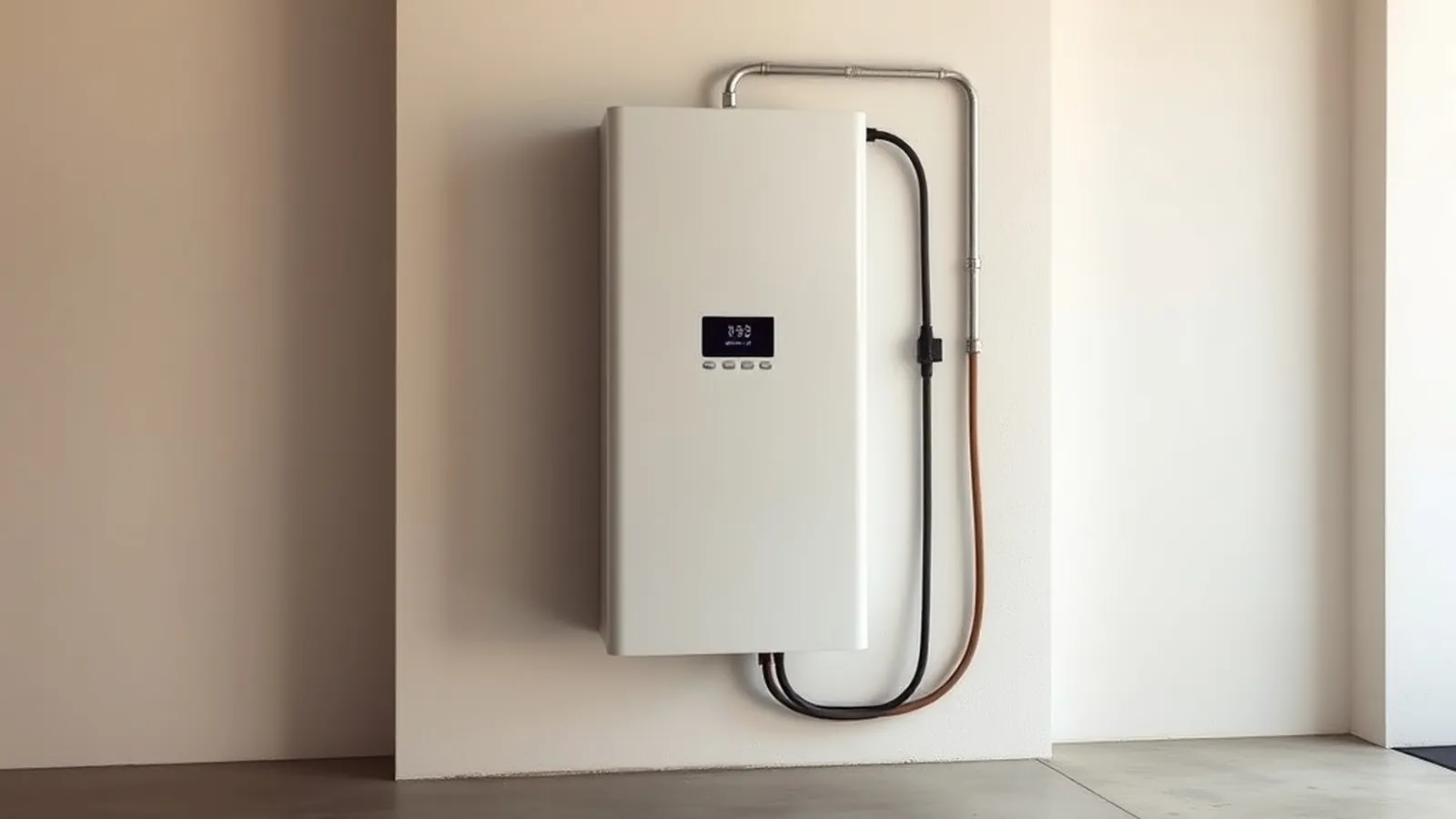
A 10 kWh battery costs between €4,000 and €6,000 installed and increases your self-consumption from 30-40% to 70-80%. But it’s not always the best investment. At the current electricity price in Spain (0.13 €/kWh), the battery on its own saves about €170 a year, so it takes longer than its useful life to pay for itself. Here we honestly explain when it’s worth it and when it’s better to invest in more panels.
Solar battery prices in 2026
All current residential batteries use LFP (Lithium-Iron-Phosphate) chemistry — the safest, no fire risk, 4,000-6,000 cycle life (10-15 years of typical daily use).
| Brand | Capacity | Installed price | €/kWh | Warranty |
|---|---|---|---|---|
| BYD Battery-Box Premium | 5.1 / 10.2 / 12.8 / 15.4 kWh | €3,000 – €9,000 | 600-800 | 10 years |
| Huawei LUNA 2000 | 5 / 10 / 15 kWh (modular) | €3,500 – €10,000 | 700-900 | 10 years |
| Pylontech US5000 | 4.8 kWh (stackable) | €2,500 – €3,500 | 500-700 | 10 years |
How much does self-consumption improve with battery
Self-consumption is the percentage of solar production you consume directly at home (without exporting to grid). Adding a battery stores daytime surplus to use at night:
| Configuration | Self-consumption | Annual savings (5 kWp Málaga) |
|---|---|---|
| Panels only | 30-40% | €600-800 |
| + 5 kWh battery | 50-60% | €825-875 |
| + 10 kWh battery | 65-80% | €900-975 |
| + 15+ kWh battery | 75-85% | €950-1,000 |
Self-consumption increase with 10 kWh
+35-40 points
Self-consumption improvement data per kWh of battery is published by IDAE in their residential self-consumption report.
When the battery IS worth it
When it’s NOT worth it (yet)
Hybrid vs AC-coupled — what to choose
| Type | How it works | Advantage | For whom |
|---|---|---|---|
| Hybrid (DC-coupled) | One inverter manages panels + battery | More efficient, single equipment, lower cost | New installation |
| AC-coupled | Solar inverter + battery inverter separate | Adds to existing solar system | Later expansion |
Illustrative example: with vs without battery in Málaga
5 kWp installation, family of 4 with air conditioning, about 7,000 kWh/year consumption (with lower consumption the battery has little to cover):
| Metric | No battery | With 10 kWh battery |
|---|---|---|
| Total investment | €6,000 | €11,000 |
| Self-consumption | 40% (3,304 kWh) | 75% (6,195 kWh) |
| Annual savings | €777 | €950 |
| Payback no IRPF | 7.7 years | 11.6 years |
| Payback with IRPF 40% (max. base €7,500) | 4.6 years | 8.4 years |
| 25-year savings (constant price) | €19,425 | €23,750* |
The IRPF deduction (DA 50 s. 2) requires your main home or a home let as a residence, an energy certificate before and after showing at least 30% less non-renewable primary energy, and works finished before 31-12-2026. Indicative information: the exact figure depends on your tax situation; consult your tax advisor.
Calculations use solar productions from PVGIS and 40% IRPF deduction from RD-L 7/2026.
If electricity gets much more expensive in the coming years (current trend), battery profitability will improve progressively. But with today’s numbers, panels alone win in pure payback.
For a personalized calculation with your real consumption profile, use our solar calculator or read the installation cost guide where we analyze all scenarios. If you’re worried about grid dependence, the April 2025 blackout analysis explains which configuration guarantees real backup during prolonged outages.
Preguntas frecuentes
Which battery brand is best?
Depends on the inverter. If you use Huawei SUN2000, the LUNA 2000 is the best integration. BYD Battery-Box is versatile and compatible with many inverters. Pylontech US5000 is the most economical option per kWh. All offer 10-year warranties.
Can I add a battery to an existing installation?
Yes, but it requires AC-coupling (a second inverter dedicated to the battery). It's less efficient than a new hybrid system and the cost is usually higher. If you're planning a new installation from scratch, prefer choosing a hybrid inverter from the start.
What battery capacity do I need?
For an average family with 4-5 kWp panels, 10 kWh battery is the sweet spot — covers typical nighttime consumption without oversizing. Less than 5 kWh is too little; more than 15 kWh gives diminishing marginal returns.
Is a lithium battery safe at home?
LFP batteries (Lithium-Iron-Phosphate) — the only ones currently installed in residential — are the safest chemically. They don't have the 'thermal runaway' risk of NMC batteries (Tesla Powerwall 1) or old lead-acid. Installed in ventilated rooms with IP protection.
Can I expand the battery later?
Yes, the main brands (BYD, Huawei, Pylontech) are modular — you add additional modules to the existing system up to the inverter's maximum. Plan from the start with an inverter that allows the maximum future capacity.
Verified sources
Every figure in this article links to its primary source. Verified 21 Apr 2026.
-
IDAE residential self-consumption study Spain
-
PVGIS solar production Málaga reference calculations
-
LIRPF DA 50 s. 2: main home or home let as a residence, ≥30% less non-renewable primary energy, works finished by 31-12-2026
-
RD-L 7/2026 IRPF deduction 40% DA 50 s. 2, maximum base €7,500 a year
━ End of article ━
Data verified against primary sources: PVGIS · BOE · BOJA · OMIE · Fundación Renovables
Last verification: 30 September 2026