
tecnologia · Editorial pillar Published 22 Apr 2026 min read
April 2025 blackout: why many solar panels didn't work
Technical explanation of the 2025 Iberian blackout and why your on-grid inverter shuts down with the grid. Which equipment does work and how to evaluate yours.
Technical content. Prices and figures are indicative estimates as of April 2026 and vary by manufacturer, installation complexity and your existing system. Consult your installer for personalized calculation.
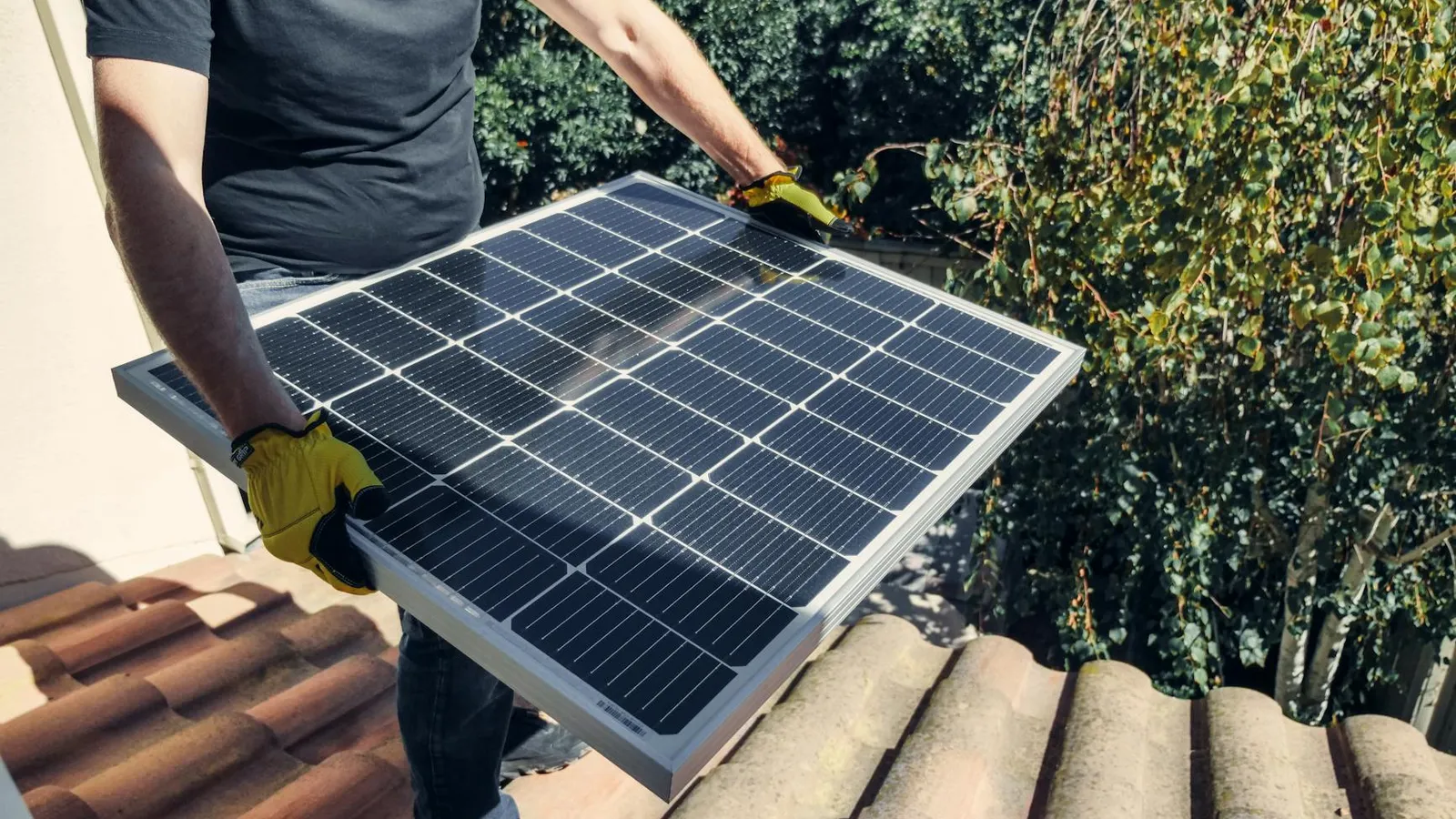
On April 28, 2025 the Iberian peninsula was without electricity for hours. And many solar panel owners discovered something nobody had explained when they signed: their photovoltaic system also shut down. Fridge, lights, router — all dark, despite having a roof full of panels working under midday sun. This guide explains why it happened, when it’s an installer fault and when not, and what would have had to change for the panels to actually have worked.
The topic matters because the blackout changed the buying motivation for self-consumption in Spain: per UNEF, after the event more than 8 million kWh of additional self-consumption were installed and customer interest shifted from “saving on the bill” to “having energy autonomy”. If you’re considering installing or already have a system, this is the missing piece.
Why on-grid inverters shut down when the grid drops
The responsible protection is called anti-islanding and is regulated by international standard IEC 62116, mandatory in Spain and almost all of Europe. The principle is simple and non-negotiable: when a grid-connected solar inverter detects the electricity grid has dropped (voltage or frequency drop outside parameters), it must disconnect in less than 2 seconds.
Why? Human safety. During a blackout, distributor operators — E-Distribución in Málaga province — go out to repair lines assuming they’re without voltage. If a residential solar system kept injecting electricity to that line from a homeowner’s roof, a technician could receive a serious electric shock. The standard isn’t optional: any inverter certified for the European market carries this protection, and installers cannot disable it.
The technical solution: island mode + hybrid inverter + battery + ATS
For a solar system to keep working during a grid blackout, it needs four coordinated pieces:
- Hybrid inverter (not conventional string) — capable of operating in two modes: grid-connected (on-grid) and isolated (off-grid/island).
- Compatible battery with the inverter — stores energy for when there’s no sun.
- Automatic Transfer Switch (ATS) — disconnects your home from the public grid and switches it to the solar system when it detects blackout. Reconnects to grid when it returns.
- Backup circuit (EPS or backup panel) — separates essential circuits (fridge, router, lighting, boiler) from the rest. Only those circuits receive energy during the blackout.
When the grid drops, the millisecond sequence: the inverter detects the drop → the ATS disconnects the home from the public line → the inverter switches from on-grid to island mode → it powers the backup circuits from the battery (and panels if daytime) → essential appliances keep working.
| Component | Function | Indicative cost |
|---|---|---|
| Hybrid inverter | Operates on-grid + off-grid | €1,800 – €3,000 |
| 10 kWh battery | Storage, powers home without sun | €4,500 – €6,500 |
| ATS (transfer switch) | Disconnects public grid, connects island | €500 – €1,200 |
| Backup panel | Separates essential circuits | €300 – €700 |
| Installation + configuration | Labor + legalization | €800 – €1,500 |
| Total backup over existing system | — | €7,900 – €12,900 |
Total backup cost
7,900 – 12,900 € indicative
Partial backup vs total backup
Adding backup doesn’t mean having the whole house as if there were no blackout — it means having essential circuits. This is an explicit decision when sizing the system:
Essential backup (~3-5 kW peak): fridge, freezer, LED lighting, router + WiFi, mobile chargers, gas boiler (electronic spark), small appliances. Enough to keep the home “habitable” for hours or 1-2 days depending on battery.
Extended backup (~5-8 kW peak): essential + TV + laptop + one large appliance (microwave, induction in pause). Requires 10-15 kWh battery and broader sizing.
Total backup (~10+ kW peak, all circuits): requires 20+ kWh battery, ≥10 kW inverter and even so doesn’t cover intensive simultaneous uses (oven + AC + heat pump at the same time). For residential it’s over-sized and expensive.
And during the day with sun? Panels produce but…
This is the detail that most confuses customers after a daytime blackout: “if my panels were working and the sun was shining, why did I have no light?”.
Technical answer: during a blackout, if your system is on-grid (without hybrid inverter + battery + ATS), the panels produce nothing. The inverter detects the dropped grid and shuts off — panels keep receiving sun, but nothing converts that energy into alternating current for the home.
If the system is hybrid with battery + ATS and you’re in island mode, panels do produce, but go to the battery (not surplus to grid). If the battery is full and the home consumes nothing, the inverter “throttles” — lowers production to avoid waste. When the home demands, the battery delivers from its stock + panels feed direct demand.
5 steps to evaluate if YOUR system would work in a blackout
Review your installation with these questions:
- Do I have a battery? Look for a cabinet or additional unit next to the inverter with brands like BYD, Tesla, Huawei LUNA, Pylontech, Sonnen. If not → your system doesn’t switch to island mode.
- Is my inverter hybrid? The manual or label says so. Keywords: “hybrid”, “storage”, “EPS backup”, “island mode”. If it’s “string inverter” without battery → it has no island mode.
- Do I have ATS (automatic transfer switch)? Look at the electrical panel near the inverter. If you see a switch labeled “transfer” or “backup” → probably yes. If not, possibly not.
- Do I have identified backup circuits? Ask the installer which essential circuits are wired to the backup panel (typically lighting + fridge + router + a couple more). If the inverter is configured for total backup, it can be different.
- Real test (if you have it): trip the main grid switch (the one in the meter box, not your panel). If the system switches to island mode correctly in less than 5 seconds, it works. If everything shuts off, you have no backup (or it’s misconfigured).
Is it worth adding backup? It depends
The honest question is not “is having backup good?” (obviously yes) but “is the cost worth it?”.
Clearly worth it if:
- You have medical devices dependent on electricity (CPAP, oxygen, home dialysis, medication fridge).
- You live in an area with frequent outages (small villages with unstable grid, rural province areas).
- You telework from home with critical equipment and economic losses from blackouts.
- You value psychological peace of mind after experiencing the 2025 blackout.
Obviously not worth it if:
- You live in urban area with stable grid (Málaga capital, Marbella center, Fuengirola) and rare minute-long outages.
- Your budget is tight and €8,000-€13,000 additional is prohibitive.
- Your only interest was saving on the electricity bill — backup doesn’t save, it protects.
For most homes on Costa del Sol in 2026, our honest recommendation: install the on-grid system without battery first, recover 6-9 years as shown in the payback guide, and add backup later if you value autonomy. Buying a battery-ready inverter adds €500 to initial cost but leaves the door open.
Preguntas frecuentes
Is it the installer's fault that my system shut down during the blackout?
No. It's a mandatory safety function under European and Spanish regulations. Grid-connected solar inverters carry certified anti-islanding protection (IEC 62116 standard) that automatically disconnects them when they detect grid drop. If your inverter had kept running without grid, it would have injected electricity into a line technicians could be repairing — with serious risk. The shutdown is correct; what was missing was a backup system.
Can I add backup to an existing system without replacing everything?
Depends on the existing inverter. If it's a modern string inverter (Huawei SUN2000, Fronius Primo, SMA Sunny Boy post-2020) it may be compatible with an AC-coupled battery module (e.g., Huawei LUNA, Tesla Powerwall 3 retrofit). If the inverter is old or has no battery port, it must be replaced with a hybrid one. Cost to add backup to existing system: €5,000-€9,500 depending on battery and complexity.
Does the battery give me total autonomy during a blackout?
No, it gives partial autonomy depending on capacity and consumption. A 10 kWh battery can power an average home in essential mode (fridge + lighting + routers + small appliances) for 12-18 hours. If you want to keep air conditioning, oven and induction during the blackout, you'd need 15-20 kWh battery and the system would be over-sized for daily use.
During the day with sun, can panels keep charging the battery in a blackout?
Yes, but only if the inverter is hybrid and the system is configured in island mode (off-grid). During a daytime blackout, panels keep producing and charge the battery — but surplus can no longer be exported to grid. When the battery is full and the home consumes nothing, the system simply stops producing (waste). That's why battery+panels sizing matters.
What if I buy a new system without battery now and want to add it in 5 years?
If the new inverter is standard string without battery port, in 5 years you'll have to replace it with a hybrid (cost €1,500-€2,500 inverter only) + battery (€4,500-€6,500) + installation. If the inverter is AC-coupled ready, you can add battery in 5 years without touching inverter (~€4,500-€6,500 total). Decision at install time: pay ~€500 more today for a battery-ready inverter, or ~€1,500-€2,500 in the future if you decide to add it.
Next steps
- Evaluate your current system with the 5 steps above — if you don’t have backup and need it, request a retrofit quote.
- Use the Solar Master calculator to size a new system with or without battery, with your real consumption.
- Compare installation prices if you’re still deciding.
- Contact us for a personalized retrofit or new system quote.
Solar Master installs on-grid systems, hybrid with battery, and backup retrofits. For personalized quote check contact. We do not process subsidies or tax deductions — we refer you to a qualified specialist.
Verified sources
Every figure in this article links to its primary source. Verified 22 Apr 2026.
-
Iberian peninsula blackout April 28 2025 Spain Portugal
-
8 million kWh self-consumption installed post-blackout UNEF
-
IEC 62116 anti-islanding inverter international standard requirement
-
RD 244/2019 self-consumption bidirectional meter obligations
-
Hybrid inverter Huawei SUN2000 Fronius GEN24 SMA Sunny Boy Storage battery compatible
-
Battery BYD HVS Tesla Powerwall 3 Huawei LUNA2000 residential 5-15 kWh
-
Maximum residential 10 kWp 20 panels 500 W
-
ATS automatic transfer switch off-grid backup
━ End of article ━
Data verified against primary sources: PVGIS · BOE · BOJA · OMIE · Fundación Renovables
Last verification: 28 April 2026